
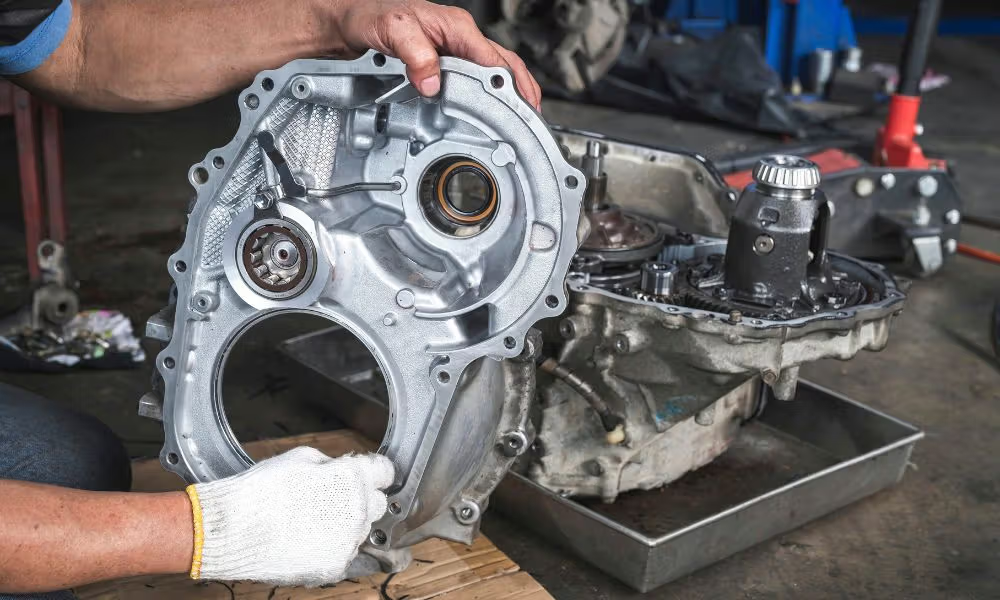
Gearbox repair is the kind of subject that most drivers prefer not to think about until they have no choice. That is an understandable instinct, but it is also a costly one. The evidence is consistent and clear: vehicles that receive attentive, preventive care avoid the most serious transmission failures, and drivers who learn to recognise the early warning signs are far better positioned to act before the damage becomes severe. Ignoring those signs is not a neutral choice. It is a decision with consequences, and those consequences are almost always avoidable.
Why Early Action Matters
There is a well-documented pattern in gearbox failure. It rarely arrives without prior notice. The transmission sends signals, sometimes subtle, sometimes unmistakable, and the outcome depends almost entirely on how quickly those signals are taken seriously. In Singapore, where vehicles contend with persistent heat and some of the most demanding urban traffic conditions in the region, the window between early warning and serious damage is narrower than many drivers realise.
A minor fluid issue left unaddressed becomes a bearing failure. A bearing failure left unaddressed becomes a full transmission rebuild. The escalation is not inevitable. It is the result of delayed action, and that delay is almost always more expensive than the intervention it was meant to avoid.
Recognising the Early Warning Signs
Unusual Noises
Sound is among the earliest and most reliable indicators that something inside the gearbox has changed. A healthy transmission operates with a certain mechanical quietness. When that changes, when a whine appears at certain speeds, when a grinding accompanies gear changes, or when a clunk is felt through the gear lever, something has shifted in the system.
Grinding in a manual vehicle typically points to synchroniser ring wear. A persistent whine in an automatic, particularly one that changes pitch with vehicle speed, suggests bearing issues or fluid pressure problems. These are not sounds that resolve themselves. They are the transmission’s way of communicating that it needs attention.
Slipping Gears
Gear slip is one of the more serious early symptoms of gearbox trouble. The engine revs increase, but the vehicle does not accelerate in proportion. The connection between engine output and road feel becomes unreliable. In automatic transmissions, this is frequently associated with worn clutch packs or degraded fluid that can no longer maintain adequate hydraulic pressure.
In Singapore’s gearbox repair workshops, fluid-related slip identified early is commonly resolved without major component replacement. The same problem, allowed to continue for weeks or months, typically requires far more extensive intervention. The difference between those two outcomes is the timing of the diagnosis.
Delayed or Erratic Gear Engagement
When a driver shifts from park to drive, the engagement should be immediate and smooth. A delay, a hesitation, or a sudden jolt into gear signals that the hydraulic system is not functioning as it should. Solenoid faults are a frequent cause in automatic transmissions, as are early-stage torque converter problems. Neither issue corrects itself without intervention.
Dashboard Warning Lights
Modern transmissions are electronically monitored, and fault codes are logged whenever the control module detects an anomaly. A warning light on the dashboard is not a bureaucratic inconvenience. It is an alert from a monitoring system designed precisely to catch problems before they escalate. Having those codes retrieved and assessed promptly is among the simplest and most effective forms of early gearbox intervention available.
Fluid Leaks and Fluid Condition
Transmission fluid that is leaking or degraded undermines every function the gearbox depends on. The signs include:
- A reddish or dark brown puddle beneath the vehicle after parking
- A burnt smell during or after driving in heavy traffic
- Fluid that appears dark, cloudy, or gritty when checked on the dipstick
- A noticeable drop in fluid level between service intervals
In Singapore’s climate, fluid degrades faster than in cooler environments. Checking fluid condition regularly is not an optional extra. It is a baseline requirement for transmission health.
Preventive Maintenance: A Practical Framework
Regular Fluid Changes
The single most effective preventive measure available to any driver is keeping transmission fluid in good condition. Fluid should be changed at the intervals specified for the vehicle, and sooner if the vehicle is used in demanding conditions, frequent stop-start traffic, towing, or extended low-speed driving. In Singapore, where those conditions are the norm rather than the exception, erring toward more frequent changes is sound practice.
Scheduled Inspections
A periodic inspection by a qualified technician provides a picture of transmission health that no amount of attentive driving can fully replicate. Pressure testing, electronic fault code retrieval, and physical inspection of the fluid and filter can identify developing problems before they produce noticeable symptoms. This is the maintenance equivalent of acting on intelligence rather than waiting for a crisis.
Attentive Driving Habits
Driving behaviour has a direct and measurable impact on transmission longevity. Allowing the vehicle to warm up briefly before driving in cold conditions, avoiding prolonged periods of high-load low-speed driving, and not shifting abruptly between drive and reverse without coming to a complete stop all reduce the cumulative stress on the transmission. These are small adjustments with compounding benefits over time.
Conclusion
The case for preventive maintenance is not complicated. It is grounded in evidence, it is consistent across vehicle types and driving conditions, and it is overwhelmingly supported by the outcomes that drivers experience when they choose to act early versus when they do not. Singapore’s driving environment makes that case even more compelling, given the additional demands it places on every component of the transmission. Early action is not merely advisable. It is the rational response to a system that communicates openly and consistently about its condition. For every driver who takes those communications seriously, professional gearbox repair becomes a scheduled, manageable event rather than an unexpected and expensive emergency.
