In addition to personal taste and design, how a motorcycle owner plans to use their motorcycle greatly impacts which one they decide to buy. Picking out a motorcycle, without knowledgeable consideration of the intended use, can lead to severe discomfort, extra costs, and safety issues. Discerning the intended use, whether it’s for commuting, leisure, touring, or off-road, is vital to making the right decisions.
Urban Riding and Everyday Use
For riders that intend to use the motorcycle for everyday commuting, efficiency and practicality are the most vital. Small motorcycles are more fuel efficient, and are easier to handle, and steer in traffic. They are also easier to park, and are more reliable in stop-and-go traffic. A motorcycle designed for use in the city will usually also have great responsive brakes making it more ideal for use in congested areas.
For Weekends and Recreational Riding
When your motorcycle will be used for riding on the weekends or for recreational purposes, riding, other considerations come into play. Cruisers and sport bikes are great options for recreational riding, as they provide great performance, and are also stylish and fun to ride. Although these bikes can be more costlier when it comes to maintenance and fuel than a daily commuter motorcycle, they provide a great balance of speed, handling, and looks to make the weekend rides more enjoyable.
Distance Riding
When it comes to long distance riding, a motorcycle is needed that is great in comfort, stability and storage. Touring and Adventure bikes are built for long rides with adjustable seating, more fuel storage and extra storage compartments for luggage. Long rides can become tiring, but features like adjustable suspensions, more storage, and comfortable seating can make the ride more enjoyable. When planning to buy used motorcycle (รับซื้อมอเตอร์ไซค์, term in Thai) for touring, one of the most important considerations is to buy one that is built for endurance and reliability.
Off Road and Adventure Riding
Motorcyclists focused on adventure or off road riding have their own unique requirements their motorcycle must possess. No problems with these sorts of bikes. These sorts of off-road bikes have robust suspension and lightweight frames with tough tires for the tough terrain of off-road riding. Additionally, off-road motorcycles are built to handle the jagged and uneven trails, mud, and other obstacles that city or on-road touring motorcycles can’t. Choosing off road bikes that have the right features for off road use, improves safety in the more challenging rides, and avoids mechanical strain.
A portion of riders are on motorcycles that have the highest accelerations and speeds. These sorts of bikes tend to be sport bikes, and big displacement motorcycles. These bikes are built for adventure. These sorts of machines are of costly nature. Less long distance travel, more side roads and commuting, fuel costs are high, and cruising is of a bad nature as the ergonomics are stiff. Choosing a bike that fulfills the required specs of the ride, is best as to not waste financial resources.
Growth in modern agriculture depends on accurate timing and consistent performance. Farmers rely on technology to save time and ensure strong results. Modern machinery provides faster preparation and smooth operation across all terrains. Efficient systems also help maintain soil balance and reduce waste. Better performance comes through precise planting patterns and improved resource management. A trusted resource for Kubota equipment ensures reliable solutions that elevate farming efficiency and long-term output.
Modern Technology Supporting Agricultural Development
Innovative tools are transforming traditional farming into efficient production systems. Precision mechanisms allow faster operation and reduce dependency on manual labor. Smart control systems monitor soil conditions and boost nutrient balance. The outcome is increased production with minimal operational stress.
Improving Yield through Advanced Agricultural Methods
New-age farming focuses on resource optimization and balanced soil health. The following points describe various methods for improving productivity across farmlands.
Regular calibration ensures accurate depth during planting operations every time
Upgraded nozzles maintain consistent spraying and protect the crop structure fully
Precision seed placement improves germination and enhances root development naturally
Balanced fertilizer flow reduces wastage while promoting steady growth rates
Smart sensor usage identifies soil moisture and nutrient availability quickly
Sustainable Growth through Equipment Innovation
Technological advancement reshapes production methods in meaningful ways. Machines designed for strength deliver consistent operation during tough conditions. Digital support systems provide accuracy that traditional methods cannot achieve.
Maintaining Consistency During Peak Seasons
Proper maintenance ensures smooth operation throughout high-demand periods. Seasonal inspections reduce delays and increase overall reliability. Clean machinery helps maintain safety and supports continuous productivity.
Promoting Efficiency through Continuous Upgrades
Regular upgrades guarantee smooth running across new working conditions. Technology improvements minimize wear and enhance user control effectively. Predictive systems identify issues before downtime begins. Reliable upgrades help achieve maximum output with balanced efficiency.
Evaluating Productivity Data through Efficient Practices
Data analysis helps track improvement through better management practices.
Equipment Type
Output Increase
Labor Reduction
Fuel Efficiency
Planters
30 Percent
25 Percent
20 Percent
Harvesters
45 Percent
40 Percent
35 Percent
Sprayers
25 Percent
30 Percent
28 Percent
Tracking performance identifies areas of potential improvement effectively. Constant monitoring ensures resources remain stable across long cycles. Farmers who follow systematic analysis achieve visible economic benefits. Data-guided decisions lead to measurable progress in every season.
Building Progress through Reliable Modern Solutions
Steady growth depends on continuous care and balanced innovation. Advanced machinery ensures long-term stability and higher harvest performance. Dependable systems provided through a trusted resource for Kubota equipment support this progress. Technology-driven solutions build confidence and improve economic value. Future farming thrives through dedication to consistent performance and smarter operation.
Scrapping a car can seem scary if you don’t know what to do. In Ontario, there are rules from the Ministry of Transportation and for the environment. It’s important to follow these steps carefully.
The car scrapping process has a few main steps. You need to get your car ready, find a licensed scrap yard, and transfer the car’s ownership. Knowing these steps helps make the process easier and right.
Key Takeaways
Understand the regulations set by the Ministry of Transportation in Ontario.
Prepare your vehicle for scrapping by removing personal belongings and hazardous materials.
Find a licensed scrap yard that adheres to environmental guidelines.
Transfer ownership of the vehicle to avoid future liabilities.
Be aware of the factors that influence the scrap value of your vehicle.
Understanding the Value of Your End-of-Life Vehicle
The value of an old car goes beyond just driving it. It can be recycled and disposed of in a green way. As cars get older, it’s key to handle them right.
The Lifecycle of a Scrapped Car in Canada
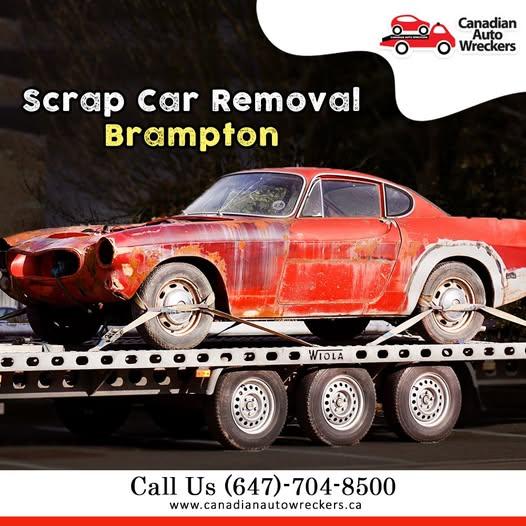
In Canada, old cars go through a detailed recycling process. They are taken apart, and parts that work are sold or used again. Metals and other parts are recycled too, saving resources and reducing waste.
Why Proper Disposal Matters
Getting rid of old cars the right way is good for the planet. Cars have harmful stuff like batteries and fluids that can pollute if not thrown away properly. In Canada, scrap car removal services follow strict rules to keep the environment safe.
Choosing a good service to get rid of your car helps the planet. It’s a big part of keeping cars sustainable.
Signs It’s Time to Consider Scrap Car Removal
Knowing when to let go of your car is key. There are signs that tell you it’s time to scrap it. These signs come when your car gets old or damaged.
When Repair Costs Exceed Vehicle Value
One big sign is when repair costs are more than the car’s value. If you’re always spending more on fixes than the car’s worth, it’s wise to scrap it. For example, if a new engine or transmission costs as much as the car, it’s time to move on.
Age and Mileage Considerations
The age and mileage of your car matter a lot. Cars with over 150,000 miles or more than 10 years old might need to be scrapped. They often need a lot of repairs.
Vehicle Age
Mileage
Scrap Consideration
0-5 years
0-80,000 miles
Low
5-10 years
80,000-150,000 miles
Moderate
10+ years
150,000+ miles
High
Safety and Environmental Concerns
Safety and the environment are very important when deciding to scrap your car. If your car is not safe to drive or harms the environment, it’s time to scrap it. Cars with rust, bad brakes, or other safety problems are dangerous.
Essential Documentation for Scrapping Your Vehicle
Before you scrap your vehicle, you need to gather important documents. This step is often missed but it’s key for legal compliance and avoiding problems.
Vehicle Ownership Papers and Identification
First, find your vehicle’s ownership papers to prove you own it. You also need valid ID to show who you are. In Canada, a driver’s license or provincial ID card works well.
Provincial Requirements Across Canada
Scraping rules vary by province. For example, in Ontario, you must return your license plates to Service Ontario. Always check with your local authorities for specific rules in your area.
Province
Required Documents
License Plate Procedure
Ontario
Ownership papers, ID
Return to Service Ontario
British Columbia
Ownership papers, ID
Surrender to ICBC
Alberta
Ownership papers, ID
Destroy or return to registry
Handling License Plates and Registration
It’s important to handle your license plates and registration right. In most places, you must return or destroy your plates and tell the authorities to cancel your registration. This stops any future problems with your vehicle.
Preparing Your Car for Scrap Removal
Before you scrap your car, it’s key to prepare it well. This makes the process smoother and might raise your car’s value. You should remove personal items, handle hazardous materials safely, and look for valuable parts to keep or note.
Personal Belongings Removal Checklist
Make sure to take out all personal stuff before giving your car to the scrap service. This includes:
Checking the glove compartment and dashboard
Emptying the trunk and under-seat storage
Removing any personal items from the interior
Clearing your car of personal items helps avoid loss and makes the scrapping easier.
Handling Fluids and Hazardous Materials
Cars have fluids and hazardous materials that need safe disposal. You should:
Drain engine oil, coolant, and other fluids
Remove batteries and other hazardous components
Check with your scrap removal service for specific guidelines
Handling these materials right is good for the environment and the law.
Valuable Components to Remove or Note
Some parts of your car might be worth something. Think about:
Removing valuable parts such as catalytic converters or premium tires
Noting any remaining valuable components for possible sale
Keeping or noting these parts can boost the value you get for your scrap car.
Determining Your Vehicle’s Scrap Value in the Canadian Market
Figuring out your car’s scrap value involves looking at a few important things. The worth of a scrap car isn’t just one thing. It’s about a mix of its features and the market’s state.
Factors That Affect Scrap Car Prices
The price of a scrap car changes based on its weight, age, model, and condition. Cars that are newer or have more metal usually get more money. This is because they have valuable parts to recycle.
Weight: Heavier cars have more metal, making them worth more.
Age and Model: Some models, with their valuable parts, can get higher prices.
Condition: Even if a car is being scrapped, parts that work can be sold.
Current Metal Market Rates in Canada
The price of scrap metal greatly affects how much a car is worth. Changes in the global market can change how much scrap metal is worth.
Regional Price Variations Across Provinces
Demand and rules in each province can change how much a scrap car is worth. Knowing these differences helps you get the best deal.
Province
Average Scrap Car Price
Ontario
$200-$500
British Columbia
$250-$550
Alberta
$220-$480
By knowing these points and keeping up with market rates, you can figure out your car’s scrap value in Canada.
How to Choose Reliable Scrap Car Removal Services
Choosing a reliable scrap car removal service needs careful thought. With many companies in Canada, it’s key to research well. This ensures a smooth and profitable deal.
Research and Verification Methods
First, look up scrap car removal services online. Make sure they are licensed and follow Canadian environmental rules. Ask friends, family, or read online reviews to help choose.
Reading Reviews and Checking Credentials
Reviews from different places can show a company’s trustworthiness and service quality. Look for certifications from known groups. This shows they follow industry standards.
Questions to Ask Before Committing
Before you decide, ask important questions. Find out how they check your car and how they figure out its value. Also, ask about towing and any extra costs. A good company will answer clearly.
Criteria
What to Look For
Licensing and Compliance
Ensure the company is licensed and complies with environmental regulations.
Reviews and Referrals
Check online reviews and ask for referrals to gauge service quality.
Transparency
Ask about their inspection process, scrap value determination, and any additional fees.
By following these tips, you can pick a reliable scrap car removal service. This ensures a hassle-free experience for you.
The Scrap Car Removal Process Explained
Scrap car removal is easy when you know what to do. It has several steps, from first contact to the final payment.
Initial Contact and Quote
The first step is contacting a scrap yard. You tell them about your car. They then give you a quote.
Scheduling and Preparing for Pickup
After agreeing on the price, you schedule a pickup. Make sure to remove your stuff and have your documents ready.
The Inspection, Payment, and Towing Process
On pickup day, the scrap yard checks your car. They make sure it’s as described. Then, they pay you as agreed.
Lastly, they tow your car away. This ends the scrap car removal process.
Process Step
Description
Key Considerations
Initial Contact
Reach out to a scrap yard for a quote
Provide accurate vehicle information
Scheduling Pickup
Arrange a time for the vehicle to be collected
Ensure the vehicle is accessible
Inspection and Payment
The scrap yard inspects the vehicle and makes payment
Have all necessary documents ready
Towing
The scrap yard tows the vehicle away
Ensure the towing process is understood
Legal Considerations When Scrapping Vehicles in Canada
When you scrap a vehicle in Canada, you must follow the law. This includes rules from both the province and the federal government.
Transfer of Ownership Requirements
One key thing is the transfer of ownership. You need to tell your province’s transportation office. You can find the forms on their website.
This step is important to avoid any problems with the vehicle later.
Tax Implications and Possible Rebates
Scrapping a vehicle can affect your taxes. You might get rebates for old, fuel-guzzling cars. Check with the Canada Revenue Agency or a tax expert for details.
Provincial Environmental Regulations
Canada’s provinces have their own rules for scrapping cars. Some need cars to be taken to special places that protect the environment. Make sure to follow these rules to avoid fines.
Making the Most of Your Scrap Car Removal Experience
One of the most frequent reasons why automotive navigation systems malfunction is power supply problems. Inadequate power can cause a navigation system to freeze, not switch on, or act strangely while in operation. Power supply issues can be difficult to identify and resolve because these systems are frequently linked with other automotive electronics. Your navigation system will continue to be dependable and operational if these problems are found and fixed quickly, avoiding disruptions while you’re traveling.
Identifying Signs of Power Supply Problems
Identifying the symptoms of a power-related issue is the first step in diagnosing power supply problems. It is obvious that there can be a power supply problem if your navigation system shuts off abruptly or doesn’t turn on at all. The screen may flicker or the machine may reboot without warning in certain situations. When the navigation system only functions when the car is moving or works sporadically, it’s another indication that there are power problems.
Checking the Fuse and Wiring Connections
A blown fuse or poor wiring connections are two of the most frequent reasons for power supply problems. The navigation system’s power supply may be cut off by a blown fuse brought on either a power surge or short circuit. Start by looking for any blown fuses connected to the navigation system in the car’s fuse box. Verify that the wiring connections are tight and corrosion-free if the fuse is still in place. For more detailed diagnostics and repairs, consider visiting Auto Repair in Shelbyville, KY.
Inspecting the Car Battery and Alternator
The alternator and battery of the vehicle are also important sources of power for the navigation system. The system might not get enough power from a weak or failing battery, particularly when starting up or when driving slowly. In a similar vein, power fluctuations could result from an alternator that isn’t working properly. Verify the alternator’s proper operation and the battery’s voltage.
Looking for Expert Help
It might be time to get expert help if simple troubleshooting techniques like checking fuses and examining wiring connections are ineffective in resolving power supply problems. Due to the complexity of car navigation systems, power supply issues may be the result of more serious electrical problems in the car. More sophisticated diagnostics can be carried out by a qualified expert to determine the source of the issue and fix any broken parts.
Conclusion
Examining the fuse, wiring, battery, and alternator is one way to troubleshoot power supply problems with your car’s GPS system. You can make sure your navigation system stays dependable and operates at its best by taking quick action to fix any indications of power-related issues. Seeking professional assistance will enable comprehensive diagnostics and required repairs if simple solutions are insufficient to keep your navigation system powered and operational for safe and effective driving.
Turn signals serve as an important means of communication between drivers and are necessary to preserve road safety. People around you may anticipate your activities and respond appropriately if you give them clear indications that you intend to turn, change lanes, or combine. The likelihood of accidents is greatly decreased by this proactive communication, especially in circumstances with heavy or fast-moving traffic. Turn signal malfunctions make it difficult for other drivers to anticipate your future action because they produce uncertainty and ambiguity. Therefore, ensuring your turn signals are well-maintained is paramount. Frequent inspections and prompt maintenance ensure that they stay dependable, bright, and visible, allowing you to clearly communicate your driving intentions and helping to create a safer driving environment for everyone.
Avoiding Expensive Repairs
Ignoring turn signal maintenance might cause more serious issues later on. The turn signals may eventually stop working completely due to damaged parts, burned-out bulbs, or bad wiring. In addition to requiring more costly repairs, this may further harm your car’s other electrical systems. You may save time and money by routinely servicing your turn signals and identifying small faults before they become more serious ones.
Preventing Legal Repercussions
Driving without working turn signals is not only dangerous but also prohibited in many places. When turning or changing lanes, drivers must indicate their intentions to other drivers; otherwise, they risk fines or penalties. Maintaining your turn signals on a regular basis helps guarantee that you are following the law and avoid needless legal repercussions. It also avoids circumstances in which improper signaling might put you at blame in a collision. You can choose the Auto Repair in Shippensburg, PA based service for the best repair options.
Improving Overall Vehicle Safety
To ensure general road safety, you must maintain every part of your car, including the turn signals. Turn signals are a component of the broader lighting and signaling system that aids pedestrians and other cars in determining your intentions. additional drivers may get confused if additional illumination systems, such as headlights or brake lights, do not cooperate with turn signals. By ensuring that your complete lighting system is operating correctly, routine turn signal checks serve to promote safer driving.
Calm for Every Drive
You may drive with confidence knowing that you are taking all necessary precautions to drive safely when your turn signals are kept up to date. Turn signal maintenance on a regular basis is an easy, proactive way to keep your automobile safe and reduce the stress and dangers that come with failures. It is safer to drive when you know that your lights are functioning correctly, whether you are negotiating congested roads or bad weather.
Handling extensive paper work is always a time-consuming and stressful process. The same applies when you are handling paperwork for your vehicle registration and much more. You may feel overwhelmed with the process whether you are transferring a title or replacing a lost license plate.
These tasks are still necessary to keep your car legally on the road. Instead of wasting an entire day at the DMV, you can choose reliable DMV services to solve your issue.
These services have expertise in handling all the DMR-related needs that saves time and money in the long run.
Let’s have a look at why investing in DMV services is worth your money.
1. Save Time
One of the main reasons people turn to comprehensive DMV services is to save time. Instead of spending hours standing in line at the DMV, you can have a professional handle the entire process for you. This is especially beneficial if you have multiple tasks to complete, such as registering a new vehicle, transferring a title, or updating your driver’s license.
These services take care of the paperwork and the legwork, allowing you to focus on more important things in your life. Whether you’re managing a busy work schedule or simply want to avoid the hassle of dealing with government offices, DMV services can be a major time-saver.
2. Reduce Stress
Let’s face it; dealing with the DMV can be stressful. The process often involves navigating confusing forms, waiting in long lines, and ensuring you have the right documents. Mistakes can result in additional trips, causing unnecessary frustration.
By using DMV services, you eliminate the stress and hassle of dealing with the DMV on your own. Professionals familiar with the ins and outs of the DMV can ensure everything is done correctly the first time, helping you avoid delays or additional fees.
3. Handle Complex Vehicle Transactions Easily
When you’re dealing with more complex vehicle transactions, such as purchasing a car from out of state, registering a business fleet, or transferring ownership of a vehicle, the paperwork can become overwhelming.
DMV services are designed to handle these types of transactions with ease. Whether you need assistance with a title transfer, duplicate registration, or another specialized service, these professionals ensure everything is handled efficiently.
If you ever find yourself locked out of your car during this process, you might also consider looking into Car Lockout Services to help you out of a bind while your DMV needs are being met.
4. Avoid Costly Mistakes
When dealing with the DMV, mistakes can be costly. Failing to file the right paperwork, missing deadlines, or forgetting to renew your registration can result in hefty fines or penalties. Even a simple oversight could mean having to pay extra fees to fix the issue.
DMV services help you avoid these costly mistakes by ensuring everything is done according to the regulations. These services know the laws and requirements inside and out, which means you’re far less likely to run into problems that could end up costing you more money in the long run.
5. Convenient Access to Multiple Services
One of the biggest advantages of DMV services is the wide range of options they provide. Whether you need to renew your vehicle registration, obtain a duplicate title, or complete a transfer of ownership, these services offer a one-stop-shop solution for all your DMV needs.
Instead of going to different offices to handle matters, you can everything sorted out in one place. This is especially helpful if you have multiple vehicle-related tasks.
Starting a wholesale dealership can be a lucrative business venture, but it requires obtaining a wholesale dealer license. This license allows you to buy vehicles in bulk from manufacturers or auctions and sell them to retailers or other wholesalers. Here’s a step-by-step guide to help you understand the process of obtaining a wholesale dealer license.
Understanding the Wholesale Dealer License
A wholesale dealer license permits you to engage in wholesale transactions of vehicles, typically excluding retail sales to the general public. It’s a crucial credential for those looking to operate in the wholesale automotive market. Here are the essential steps to obtain your wholesale dealership license.
Steps to Get a Wholesale Dealer License
1. Research State Requirements
The requirements for a wholesale dealer license vary by state. Begin by researching the specific requirements in your state, which can include specific licensing fees, bonding requirements, and application procedures. Check your state’s Department of Motor Vehicles (DMV) or equivalent regulatory agency for detailed information.
2. Complete the Application
Once you understand the state-specific requirements, fill out the wholesale dealer license application. This form typically requires information about your business, including the name, address, ownership details, and the type of vehicles you plan to deal with.
3. Secure a Business Location
Many states require you to have a business location that meets specific criteria for a wholesale dealership. This location might need to have a dedicated office space, a landline phone, and signage. Ensure your business location complies with state regulations.
4. Obtain a Surety Bond
A surety bond is often required to protect your clients and the state against any potential fraud or malpractice. The bond amount can vary, but it’s a necessary step to obtain your license.
5. Attend Pre-Licensing Education
Some states mandate pre-licensing education or training for wholesale dealers. This training covers various aspects of the wholesale vehicle market, including legal and regulatory requirements. Check if your state requires this and complete the necessary courses.
6. Pass a Background Check
A background check is typically part of the application process. This check ensures that applicants have a clean criminal record and are suitable for operating a wholesale dealership.
7. Submit Your Application and Fees
After completing the necessary steps, submit your wholesale dealer license application along with the required fees. These fees can include application processing fees, licensing fees, and fees for background checks.
8. Wait for Approval
Once your application is submitted, it will be reviewed by the relevant state authorities. The approval process can take several weeks. Upon approval, you will receive your wholesale dealer license, allowing you to legally operate your wholesale dealership.
Maintaining Your Wholesale Dealer License
After obtaining your license, you must comply with ongoing requirements to maintain it. These can include renewing your license periodically, keeping up with continuing education requirements, and adhering to state regulations for wholesale transactions.
Acquiring a wholesale dealer license is a crucial step for anyone looking to enter the wholesale vehicle market. By following the outlined steps and understanding your state’s specific requirements, you can navigate the application process smoothly and start your journey as a wholesale vehicle dealer. Ensure to stay informed about any changes in regulations to maintain your license and operate your business successfully.
A pre-owned car, also commonly referred to as a used car, is a vehicle previously owned and driven by one or more individuals before being sold again. Used Cars are sold by dealerships, private sellers, or through online platforms. Pre-owned cars can vary in age, condition, mileage, and ownership history. Some pre-owned cars may be relatively new and have low mileage, while others may be older and have higher mileage. The condition of a used honda in fresno can also range from excellent to fair, depending on how well it has been maintained and cared for by its previous owners.
List of pre-owned cars with cheap prices
When it comes to pre-owned vehicles with cheap prices, several car models are known for being affordable in the used car market. Keep in mind that prices can vary based on factors such as location, condition, mileage, and model year. Here are some car models of used cars for sale in fresno that are often available at relatively lower prices:
Honda Civic. The Honda Civic is a compact car, reliable and fuel efficient. It has a reputation for retaining its value, but older model years can be found at affordable prices.
Toyota Corolla. The Toyota Corolla is another compact car that offers reliability and good fuel economy. It has a long-standing reputation for its durability, and pre-owned models can be found at reasonable prices.
Ford Focus. The Ford Focus is a compact car that offers a comfortable ride and decent fuel efficiency. Due to its popularity, used models can often be found at affordable prices.
Chevrolet Cruze. The Chevrolet Cruze is a compact car that offers a spacious interior and a smooth ride. It has competitive pricing in the used car market, making it a budget-friendly option.
Nissan Sentra. The Nissan Sentra is a compact sedan known for its affordability and practicality. It offers decent fuel efficiency and a comfortable ride, and used models can often be found at lower prices.
Hyundai Elantra. The Hyundai Elantra is a compact car that offers good value for the money. It has a stylish design, comfortable interior, and competitive pricing in the pre-owned market.
Kia Forte. The Kia Forte is another compact car that provides a good balance of features, affordability, and reliability. It offers a spacious cabin and is often available at good prices as a used vehicle.
Prices vary on factors, such as:
location
demand
specific features
trim levels
Research and compare prices from different sources, such as local dealerships, online marketplaces, and classified ads, to find the best deal on a pre-owned vehicle.
Which used car model is a better choice?
Determining the “better” choice among used car models depends on your specific needs, preferences, and budget. There are various factors to consider when selecting a used car, including reliability, fuel efficiency, safety features, maintenance costs, resale value, and personal preferences such as style and size, including:
Reliability
Fuel efficiency
Safety features
Maintenance and repair costs
Resale value
Personal preferences
Ultimately, the “better” choice will depend on how these factors align with your requirements. Consider having a trusted mechanic inspect any used car you’re seriously considering to ensure it’s in good condition.
Buying an expensive car and not maintaining it regularly is one of the worst things you can do to your vehicle. However, the maintenance of armored vehicles is not the same as any regular vehicle and therefore, you must properly research the various types of servicing and support that are needed to keep your vehicle smooth. Though these vehicles are quite rough and tough, they still need certain kinds of servicing and maintenance on a regular basis because these vehicles are often driven in harsh conditions. Therefore, proper maintenance of the armored sedan ensures and guarantees its proper functioning.
Maintenance tips for armored vehicles:
Inspections: Before taking your vehicle on a long route that might be full of uneven trains and harsh environments, you should get it inspected for any critical fault. Such inspections should be conducted before and after the vehicle has been used. Certain scheduled maintenance are also recommended by the manufacturer which shouldn’t be ignored at any cost.
Check all fluids: Armored vehicles heavily rely on various types of fuels and fluids such as oil brake fluid, engine oil, coolant, etc. Any discrepancy in these tanks can lead to the malfunctioning of the vehicle. Therefore, regular fluid checks are an important factor to ensure the proper functioning and maximum performance of the vehicle.
Cleaning: Just like any other regular vehicle, timely cleaning of armored vehicles is very important. A clean vehicle looks beautiful to the person inside the car and the viewers who are outside the car. It maintains a beautiful appearance and also removes dirt and debris that can cause damage to the car. However, while cleaning the car, ensure that you use the cleaning products and methods that were suggested by the manufacturer.
Maintenance of weapon system: Many armed vehicles include weapon systems that should be inspected on a regular basis and also be cleaned, lubricated and tested to ensure their smooth functioning. The maintenance of armed vehicles also includes measures such as checking for loose connections, repairing or replacing damaged wires or certain components, etc.
To ensure the safe and smooth functioning of armored vehicles, you must carefully follow the above-mentioned guidelines and maintenance tips. Any negligence or legal laziness can make your ride tough and tiresome. One must understand that armed vehicles are not immune to damage, although they do degrade at a very slow rate.
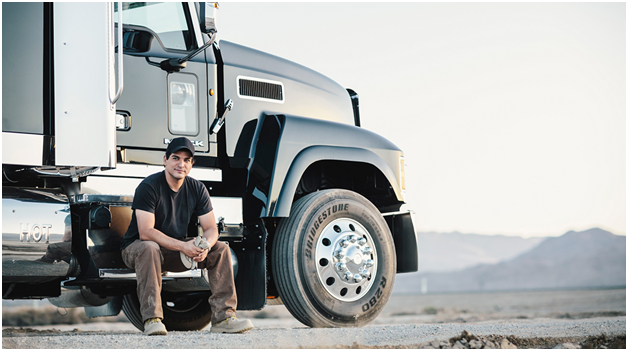
Truck driving jobs requires travel and new people to meet. The biggest benefit of truck driving is that people depend on you daily. Truck driving has many other positive aspects as well. Your job is much more fulfilling when you know what you do matters. Like other employees, truck drivers working in trucking businesses have access to a full range of standard benefits like health, dental, vision, and life insurance. Most trucking businesses give these perks to your family as well. If you are searching for a steady, adaptable job, you might want to look into the truck driving jobs. As a driver, finding enduring and reliable work in the trucking sector is feasible. Let’s see about the valuable advantages of choosing the truck driving job:
Good salary
The size of the business, the location of the position, and the level of experience the truck driver has can all affect salaries. Truck drivers are in high demand, so they may count on this line of work as a reliable source of income. Furthermore, you can be rewarded for taking certain routes other drivers don’t want to take. Some businesses provide rewards for maintaining a high level of safety or for traveling a specific distance.
Career advancements
If you like your job as a truck driver, you can frequently pursue additional training to earn a higher wage or open up new career options. For instance, you may go into management or get certified to teach at a truck driving school. If you are interested in entrepreneurship, you might start your own trucking business as an owner-operator.
Become independent
You should start looking for a new career soon since you will experience burnout if you work a job that requires a schedule you can’t commit to. Whether you enjoy working independently or alone, a career in trucking may be quite successful for you.
Different people have different interests, but truck driving might be for you if you are looking for a slower-paced, more isolated existence. You can have as much alone time as you need as an independent person with a commercial vehicle.
Job security
The trucking industry expands together with the economy and is frequently referred to as your economy’s foundation or lifeblood. In other words, there is a demand for truck drivers when there is a demand for goods. Job stability is a benefit for truck drivers because of the ongoing need for drivers, which results in urgent recruiting.
Trucking business recruitment is highly competitive and, therefore, when you apply for positions, you have more power than job seekers in other occupations.
No Degree Required
Pay for truck drivers is comparable to that of many other advanced-education jobs. You can get your commercial driver’s license and become a truck driver in as little as three weeks. You need a CDL to be able to drive heavy trucks and move more profitable kinds of freight, which will boost your income. So, although a CDL is required to operate trucks for greater loads, a degree is not required to be a truck driver.
Bottom line
Thus, the above-mentioned are the valuable advantages of choosing truck driving jobs. The car driving job has a lot of benefits and allows you to travel for a long time, and it allows you to earn a lot of money.